
Less Browsing, More Answers: Plan Your IMTS Visit with Precision360
IMTS 2026 is scheduled for September 14-19, 2026, at McCormick Place in Chicago. For manufacturers, that is a valuable opportunity, but it can also become a long week of walking aisles, collecting brochures, and leaving with more questions than answers.
The shops that get the most from IMTS usually arrive with a production problem already defined. They know what they need to improve: throughput, uptime, part quality, labor utilization, setup time, secondary operations, inspection, or long-term support. That focus changes the visit from “see what’s new” to “find what fits.”
Precision360 helps manufacturers evaluate Tsugami machine tools, automation, accessories, parts, service, and support through that same practical lens. Whether you are actively planning a machine purchase or using IMTS to compare future options, the right preparation can make every booth conversation more productive.
Start With the Production Constraint, Not the Machine
It is easy to start an IMTS plan with a list of machines to see. A better starting point is the constraint that is holding production back.
Before the show, define the problem in plain operational terms:
- Are cycle times limiting output?
- Are complex parts requiring too many operations?
- Are operators stretched across too many machines?
- Is inspection creating a bottleneck after machining?
- Are machine age, maintenance needs, or part availability affecting uptime?
- Are changeovers consuming too much available spindle time?
- Are you trying to move more work into unattended or lightly attended production?
That list will help your team compare equipment based on what matters on your floor. A Swiss-type lathe, turning center, multitasking platform, machining center, automation cart, coolant system, or inspection process should be evaluated against the same goal: how well it supports the work you actually need to run.
For teams still narrowing the field, Precision360’s machine catalog is a useful pre-show reference point for reviewing Tsugami platforms and machine categories before walking the floor.
Build a Short List of Questions for Every Booth Visit
At a large manufacturing technology show, the most useful booth conversations are rarely the broad ones. “What does this machine do?” is only a starting point. The better question is, “How would this fit our parts, process, operators, and support model?”
Bring a short list of questions your team can reuse across booth visits:
Part and Process Fit
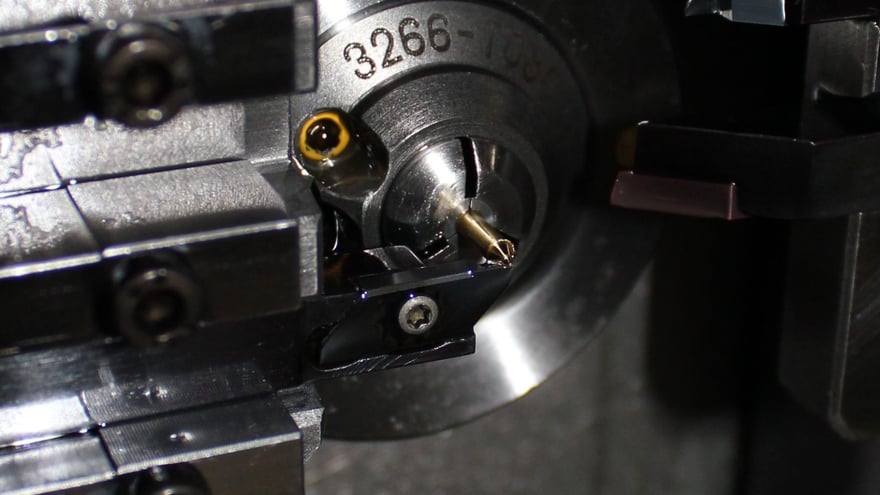
Ask how the machine or system applies to your actual part family, material mix, tolerance needs, lot sizes, and secondary operations. If you run small, complex parts, for example, your questions may center on guide bushing strategy, tool capacity, sub-spindle work, live tooling, part handling, and process consolidation.
Automation Readiness
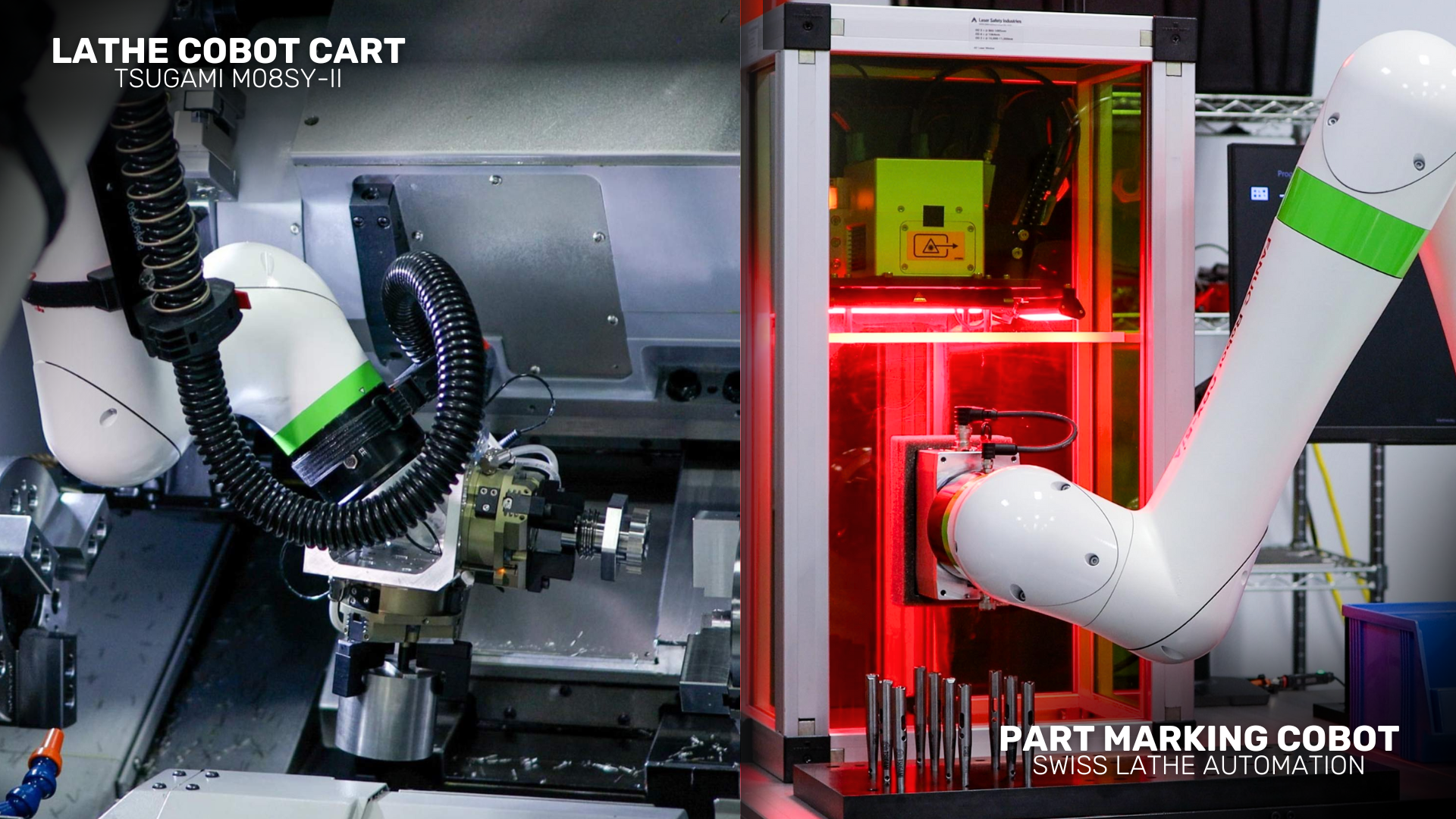
If labor availability or throughput is part of the business case, ask what automation options are practical for your mix. Precision360’s automation solutions include small-parts manufacturing approaches such as robotic tending, inspection, washing, drying, marking, and integration with production workflows.
The goal is not to automate for the sake of automation. The goal is to understand where automation can help stabilize repeatable work, reduce manual handling, support longer run windows, or improve consistency around post-machining steps.
Floor and Implementation Requirements
Ask what the machine requires beyond the purchase order: floor space, power, air, coolant strategy, bar feeding, workholding, tooling, training, maintenance access, and installation planning. These details often determine whether a promising machine is realistic for your timing, staffing, and facility.
Service and Lifecycle Support
Machine selection should include the support conversation early. Ask who helps with installation, training, maintenance planning, service needs, and parts. Precision360’s customer support resources are a useful place to review service, parts, sales, financing, delivery, installation, operator training, and maintenance support before or after the show.
Plan Around Use Cases, Not Booth Count
IMTS can reward curiosity, but a packed booth schedule can dilute the purpose of the trip. Instead of trying to see everything, organize the visit by use case.
For example:
- “We need to reduce secondary operations on a family of turned parts.”
- “We need a better automation path for small batches.”
- “We need to improve inspection flow for critical dimensions.”
- “We need to compare machine options for higher-complexity work.”
- “We need to understand what support is required after installation.”
This makes it easier to assign team members to specific conversations. An owner or president may focus on capital planning and production capacity. A plant manager may focus on implementation, staffing, and uptime. A programmer may focus on tooling, control features, part transfer, and changeover. A quality leader may focus on inspection, traceability, and process control.
When everyone is solving the same defined problem from their own role, the post-show decision is clearer.
Bring Real Production Context
A brochure can explain machine features. It cannot explain your shop’s constraint.
Before IMTS, gather enough production context to make vendor conversations specific:
- Part drawings or representative part families
- Current machine/process routing
- Material types and tolerance requirements
- Annual volume or typical lot size ranges
- Current cycle time or changeover concerns
- Secondary operations you want to reduce
- Inspection steps that slow flow
- Staffing or operator-coverage limitations
- Maintenance or uptime concerns with current equipment
- Target timeline for evaluation, budgeting, or installation
You do not need every answer before the show. You do need enough detail for a productive technical conversation. A good partner can help you identify what still needs to be validated.
Evaluate Automation With the Whole Process in Mind
Automation often gets discussed as machine tending, but the real opportunity may sit around the entire part flow.
For small parts manufacturing, that can include loading, unloading, cleaning, air blow, inspection, part marking, tray placement, and data feedback. The right automation discussion should consider the work before and after the cut, not only the time the machine is running.
Ask questions such as:
- Which part families are stable enough for automation?
- How often do we expect changeovers?
- What part presentation or fixturing is required?
- Does the process need inspection built into the cell?
- Will operators move the automation between machines?
- What machine options are required for compatibility?
- What training will operators and programmers need?
These questions help separate practical automation opportunities from ideas that may not fit the current production environment.
Do Not Leave Support Until the End
A machine purchase is not just an equipment decision. It is an operating decision.
Before committing to a direction, understand how support works after the show conversation ends. That includes installation planning, operator training, maintenance training, service access, parts support, and long-term communication. Precision360’s service and parts resources can help teams think through support requirements before they become urgent.
For many manufacturers, uptime depends as much on planning, training, and support responsiveness as it does on the machine selected. That does not mean every issue can be eliminated. It does mean the support model should be part of the evaluation from the start.
How Precision360 Can Help Before, During, and After IMTS
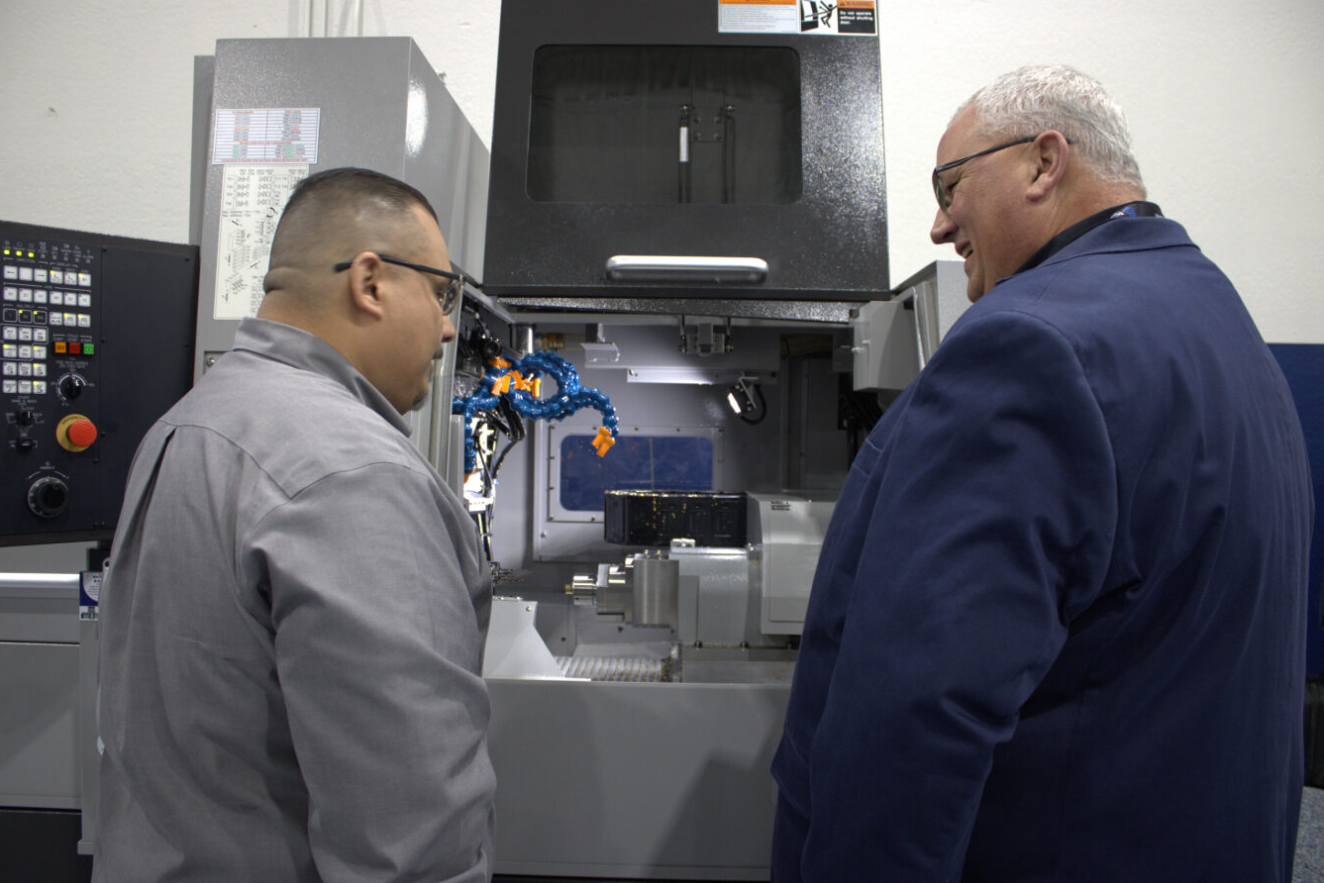
Precision360 works with manufacturers evaluating Tsugami machine tools, automation, accessories, parts, service, and support. For IMTS planning, that role is practical: helping your team turn a broad show visit into a focused production conversation.
Before the show, Precision360 can help you clarify what to look for based on your parts, process, and operational goals. During the show, the team can help you ask better questions and evaluate options more directly. After the show, Precision360 can help turn what you saw into a more structured next step, whether that means machine selection, automation planning, support review, or a quote conversation.
To start that discussion, visit Precision360’s contact page or review available Tsugami machine options before the show.
FAQ: Planning an IMTS Visit for Machine Tool Decisions
When is IMTS 2026?
IMTS 2026 is scheduled for September 14-19, 2026, at McCormick Place in Chicago.
What should manufacturers do before attending IMTS?
Manufacturers should define their main production constraint, gather representative part and process information, identify priority booth visits, and prepare questions around machine fit, automation, implementation, service, parts, and training.
How can a shop make IMTS booth visits more productive?
A shop can make booth visits more productive by discussing specific part families, current bottlenecks, tolerance needs, staffing constraints, and desired process improvements instead of only asking for general machine features.
Should automation be part of the IMTS plan?
Yes, if labor coverage, throughput, repeatability, inspection flow, or unattended production is part of the business case. Automation should be evaluated around the full process, including part handling, inspection, cleaning, marking, and operator workflow.
What should happen after IMTS?
After IMTS, manufacturers should compare options against production fit, implementation needs, support requirements, and budget timing. The best next step may be an application review, quote request, automation consultation, or support planning discussion.
Conclusion
IMTS is too valuable to treat as a browsing trip. The strongest visits start with a production question and end with a clearer path forward.
If your team is preparing for IMTS 2026, Precision360 can help you focus the conversation around the machines, automation options, support needs, and implementation details that matter on your floor.