
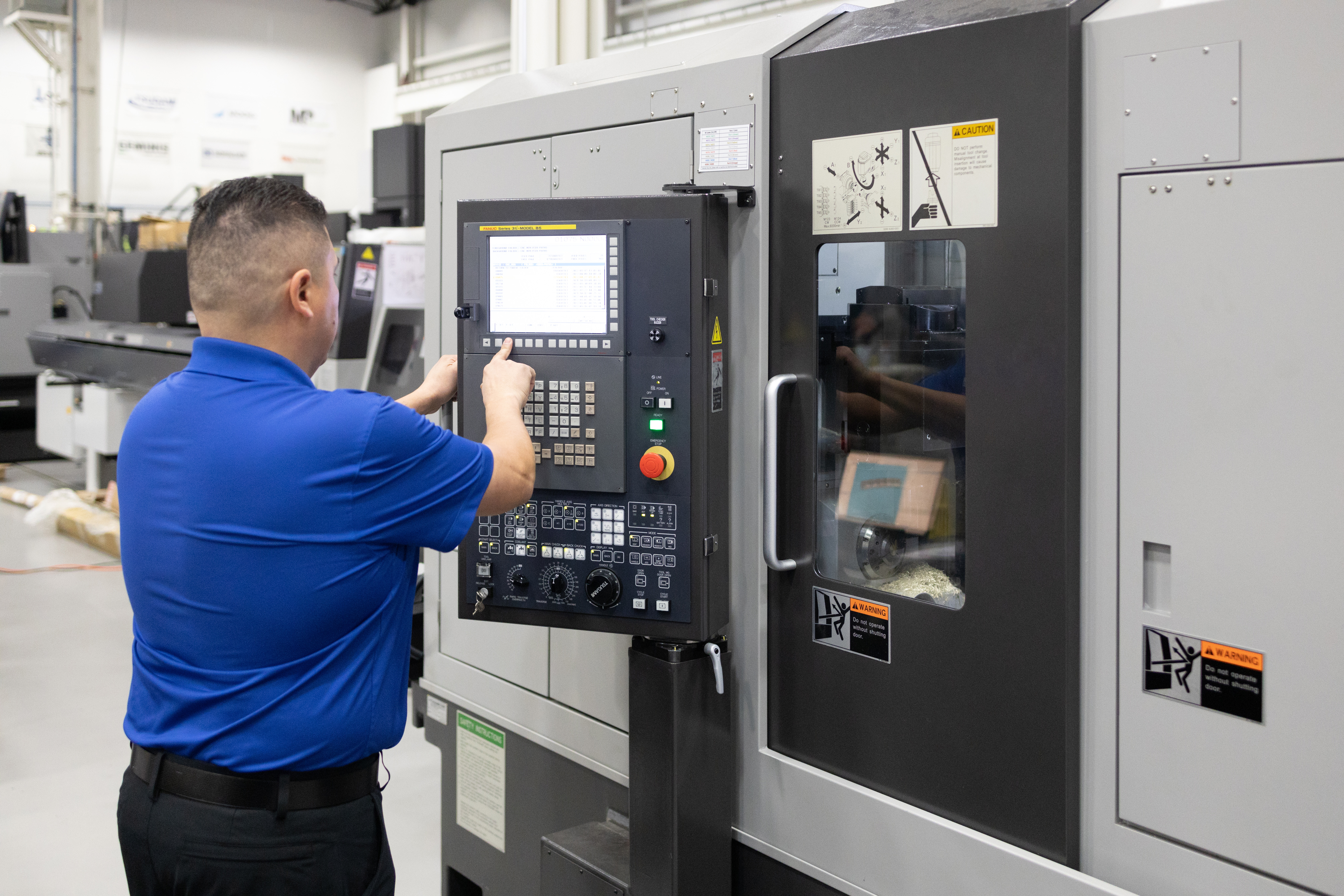
A useful machine recommendation begins with the part and the production requirement. The machine comes later. Before an applications engineer can compare configurations, the team needs to understand what must be made, how much must be made, what the print requires, which operations belong in the process, and what the shop can support during implementation.
From there, the team can determine where each operation should take place: inside the machine, through connected automation, at a nearby station, or in a separate department. Combining operations can reduce handling and help preserve relationships between features. However, consolidation can also place more of the process on one asset and increase tooling, programming, validation, or changeover complexity. The goal is not to perform as many operations as possible in one machine. It is to define the process that best fits the production requirement and its risks.
That process should be established before acquisition or tax timing influences the decision. A year-end tax provision or acquisition option may affect when a manufacturer proceeds, but it should not determine the manufacturing approach. First, define a process that can produce acceptable parts under realistic production conditions. Then determine whether the technical, operational, financial, and tax timelines align.
The Part Starts the Recommendation
Start by mapping the part’s current production process. If the part moves through several machines, identify where it is turned, milled, drilled, deburred, washed, marked, and inspected. Account for manual handling, queues, work-in-process, setup requirements, and any outside processes. This review helps the engineer understand whether the project involves adding capacity, reducing handoffs, improving control of critical features, enabling unattended production, or adding a capability the shop does not have today.
The review should also define the customer’s requirement in practical terms. A print and solid model are important, but they provide only part of the necessary input. The applications engineer also needs to know whether the project involves new work, additional capacity, process consolidation, replacement of aging equipment, or a specific quality or staffing constraint.
Before discussing machine models, the project team should agree on what success looks like. That definition may include an acceptable part, a target output range, required lot sizes, changeover expectations, a staffing plan, floor-space constraints, or a date tied to a customer program. Each measure needs an agreed basis. A target based on an ideal cycle-time estimate is different from one based on scheduled output that accounts for tool changes, inspection, material replenishment, and planned downtime.
Part Features Reveal the Process Demands
An applications engineer reads the part as a sequence of manufacturing decisions. Outside diameters, bores, threads, grooves, tapers, flats, cross holes, off-center features, milled profiles, and back-end work all affect how the part may be held, cut, transferred, and completed. The relationship between features can be as important as the features themselves. A tight positional requirement between a turned diameter and a milled feature may favor keeping those features under one setup, provided the proposed process can hold and verify the requirement. A feature may be simple on the print but difficult to reach without excessive tool extension, an awkward orientation, or a second operation. Thin walls, small sealing lands, delicate threads, and cosmetic surfaces may require extra attention to clamping force, chip contact, part handling, and collection.
This is where an early part review can prevent a poor machine comparison. Two machines may both appear to cover the nominal work envelope, yet differ in how naturally they support the required tool access, operation sequence, transfer strategy, or finished-part handling. The recommendation should reflect the complete process, not a simple diameter-and-length check.
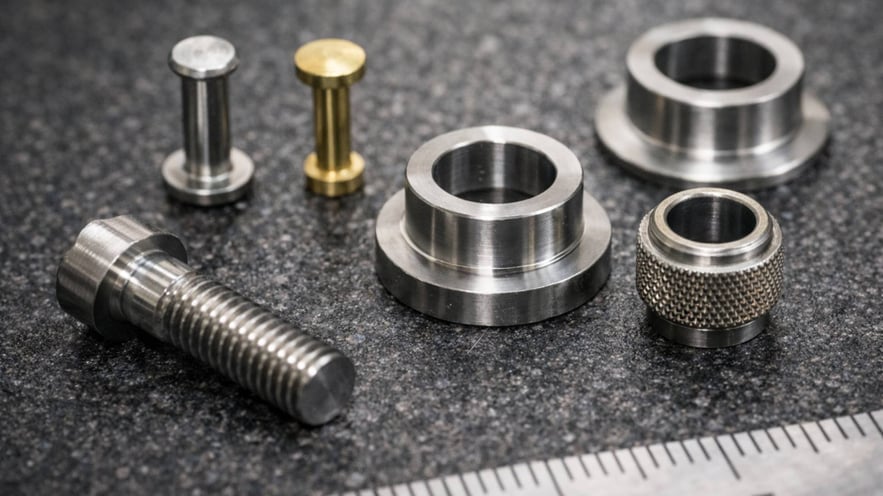
Material Tolerances and Volume Define the Assumptions
Volume should be translated into a realistic production scenario. Annual demand alone does not account for lot size, release pattern, number of shifts, seasonal peaks, product mix, changeover frequency, or the hours available to run the job. A credible capacity model records these assumptions and separates cutting time from loading and unloading, tool service, inspection, replenishment, setup, and planned downtime. It should also distinguish assumptions based on measured data from those that still require validation.
Material is another important input because it affects more than cutting data. Its condition and consistency influence chip formation, heat, tool selection, coolant strategy, workholding, bar preparation, and the frequency of intervention. The engineer should confirm the exact alloy or grade, hardness or heat-treated condition when relevant, stock form, dimensional variation, straightness expectations, and any certification requirements that affect purchasing or production control. Material requirements must then be considered alongside the specifications on the print. The team should identify critical dimensions, datum relationships, geometric tolerances, surface-finish requirements, thread requirements, and other features that will drive inspection frequency. It should also determine whether those requirements apply at final inspection, after a downstream treatment, or under a particular temperature or cleaning condition. If the print leaves a critical interpretation open, the team should resolve it with the customer before finalizing the process.
Machine and Automation Follow the Process
Only after the process is defined should the engineer compare machine categories and configurations. The review may consider work envelope, spindle and axis arrangement, tool capacity and access, part transfer, control capability, chip and coolant management, stock feeding, finished-part collection, maintainability, floor space, and the shop's experience with similar equipment. Supported Tsugami technology becomes relevant through this application fit: a feature matters because it enables a required operation, supports a stable sequence, or helps the shop meet a defined production condition.
Automation should be evaluated with the same discipline, beginning with the task it needs to perform. The requirement may involve bar replenishment, part loading and unloading, machine tending, part collection, inspection, washing, drying, marking, or support for unattended operation. From there, the team should define the inputs, exceptions, and operating responsibilities. That includes how raw material will be presented, how finished parts will be protected, how nonconforming parts will be contained, how gauges or inspection devices will exchange data, and what happens when a tool, material supply, or downstream station needs attention. The team should also establish who owns replenishment, recovery, changeover, preventive maintenance, and alarm response. For applications involving multiple part numbers, the review should account for gripper and fixture changes, recipe control, and the time required to return the system to production.
Define the Implementation and Validation Plan
Once the machine and automation concept are defined, the review should address how the proposed process will be implemented and validated. A machine recommendation is stronger when that plan is visible before the purchase decision.
The tooling concept should identify the cutting tools, holders, workholding, stock support, coolant delivery, and special items required for the proposed sequence. Long-lead and application-specific components should be separated from standard items so their effect on the schedule can be reviewed. Programming responsibilities should also be clear. The team should establish who will create the initial program, what simulation or verification is expected, how revisions will be controlled, and what information the customer’s programmers need before training or runoff. A preliminary cycle estimate should state its assumptions. It should not be treated as a guaranteed production result unless the parties have defined and validated the test conditions.
Before runoff, the customer and applications team should agree on acceptance criteria. The plan should identify the part revision, material, quantity, critical characteristics, measuring methods, gauges or inspection equipment, sampling approach, and responsibility for reviewing and dispositioning the results. A runoff may demonstrate that the proposed process can make the part under the agreed conditions. Production readiness, however, also depends on repeatability over time, tool-life management, material consistency, operator practices, and the shop’s quality system.
Installation and Training Belong in the Project Scope
The installation plan connects the selected process to the actual facility. Site preparation may include the machine layout, foundations or floor requirements when applicable, rigging access, electrical service, compressed air, coolant and chip handling, ventilation, network access, material flow, and space for auxiliary equipment. The project owner should confirm who is responsible for each item and when it must be complete.
Training should reflect the people who will run and support the process. Operators may need setup, operation, offset, inspection, and recovery training. Programmers may need control and process instruction. Maintenance personnel may need preventive-maintenance and troubleshooting knowledge. Scheduling training near startup, with the right people available and the application materials ready, helps the shop turn installation into a controlled production launch.
Precision360 can help customers evaluate Tsugami technology, prepare for implementation, and connect the project with relevant applications, training, service, parts, and technical resources. The scope should state which organization is responsible for each activity so the customer, Precision360, Tsugami America, and any integrator or other provider are accurately represented.
Equipment Timing and Section 179
For the 2026 tax year, businesses may be able to deduct up to $2,560,000 under Section 179. That maximum begins to decrease when the total cost of qualifying property placed in service during the year exceeds $4,090,000. The actual deduction depends on eligibility requirements, taxable business income, tax elections, entity structure, and other factors specific to the taxpayer. These 2026 limits appear in IRS Revenue Procedure 2025-32.
The placed-in-service requirement is particularly important in an equipment project. IRS Publication 946 explains that property is placed in service when it is ready and available for its specific use. Its machine example distinguishes delivery from readiness: a machine delivered in one year but not installed and operational until the next is placed in service in the later year. Manufacturers should ask their tax advisers how that standard applies to the machine, automation, accessories, software, installation work, acceptance process, and their specific facts.
This makes the manufacturing schedule part of the timing conversation. Machine selection, configuration, tooling, automation integration, site preparation, runoff, installation, and startup can all affect when equipment is genuinely ready for its intended use. A year-end purchase decision does not compress those technical steps or guarantee a particular tax result.
Once the process and implementation scope are defined, the customer can discuss acquisition resources with the appropriate providers. Machinery Finance Resources is a financing provider and acquisition-enablement resource associated with the broader Precision360 offering. Financing approval, rates, terms, documentation, and timing require current information and provider review. Precision360 does not provide tax advice or guarantee financing or tax savings.
Match the Recommendation to the Production Need
The most useful machine recommendation is one the project team can trace back to its assumptions. The part explains the operations. The operations explain the required capabilities. The production model explains the capacity and automation discussion. The implementation plan explains the schedule. Only then should acquisition and tax timing influence when the manufacturer proceeds.
Manufacturers considering equipment before year-end can begin by sharing the current part print and model, material condition, production volumes, existing process, critical quality requirements, desired scope, facility constraints, and target production date. Precision360 can use that information to start an applications review and identify the technical questions that need answers before a Tsugami machine or automation recommendation is made.
Ready to evaluate a new part or production requirement? Contact Precision360 to start an applications review.
Section 179 information is provided for general educational purposes and is not tax advice. Consult a qualified tax adviser and current IRS guidance for your specific circumstances.